If you have been watching the Toronto market this July, you have noticed something. Some homes are selling. Others are sitting. The difference between the two groups is not location, not price point, and not square footage. It is presentation. The homes moving right now are the ones that look exceptional in photos and deliver on that promise in person. The ones sitting are the ones that did not make that investment.
In This Guide
What is actually happening in the summer market?
Direct Answer
The Toronto summer market is slower than spring in transaction volume — that is normal and expected. But homes are selling. The ones that go are correctly priced and exceptionally well presented. The ones sitting are overpriced, under-prepared, or both. Summer does not punish sellers. It punishes sellers who treat presentation as optional. As of July 2026.
Every July follows the same pattern. Families with school-age children pause their search. Vacations pull buyers away for stretches. The raw number of transactions drops from spring levels. This is not a crisis. It is the seasonal rhythm of the GTA market, and it has been consistent for years.
What is less discussed is what happens to the buyers who are still active in July and August. They are not a crowd. They tend to be serious, motivated, and looking carefully. They have time to compare listings side by side, look at every photograph, and book showings only on properties that genuinely impress them. In spring, a mediocre listing still gets foot traffic because buyer demand is high and options are being snapped up. In summer, a mediocre listing sits.
How do summer buyers behave differently?
The Summer Buyer
Summer buyers are typically motivated by a specific circumstance — a job change, a life transition, a lease ending, or a deliberate choice to buy while competition is lower. They are not browsing casually. They are comparing listings carefully and booking showings only on the properties that stand out in photos. A well-staged listing is visible to this buyer in a way it would not be in a crowded spring market where everything moves regardless.
In spring, buyers sometimes book a showing on a property with average photos because they are afraid of missing out. In July, that urgency is gone. They open the listing app, scroll through photos, and make a quick judgment about whether the property is worth their Saturday afternoon. If the photos do not convince them, they move on.
This is not a pessimistic observation. It is actually good news for sellers who are prepared. Fewer competing listings means less noise for a well-presented property to cut through. A staged home with strong photography in July can generate serious, focused attention from buyers who are ready to act. That is a meaningful advantage for the seller willing to put the work in.
Why life-transition buyers matter in summer
A meaningful share of summer buyers in the GTA are navigating a life change: retirement, divorce, a child leaving home, a job relocation, a health situation that has changed their housing needs. These buyers are not waiting for fall. They need to move on a timeline that does not align with the spring market calendar. They tend to be decisive when they find the right property, and they have the financial capacity to close. A home that photographs beautifully and shows well reaches this buyer at exactly the right moment.
The summer staging advantage most sellers miss
The Seasonal Opportunity
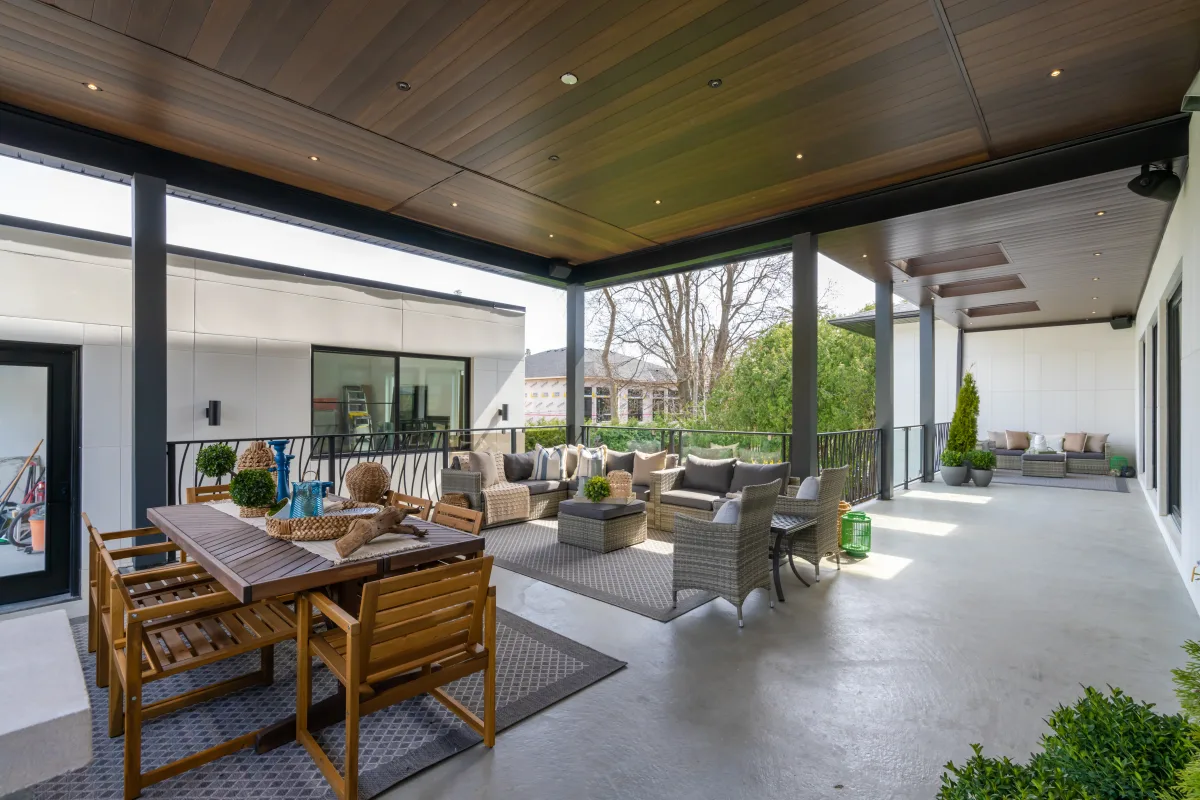
Summer is the only season when outdoor spaces can be photographed at their full potential. A staged patio, deck, or garden in July looks completely different from the same space in November or February. Sellers with usable outdoor areas who list in summer and stage those spaces well have an asset that no spring or fall listing can replicate in the same way.
Consider what a buyer sees when they look at a listing with a staged outdoor patio in late July: comfortable seating, clean lines, greenery, afternoon light. They are not looking at a patio. They are imagining their summer. That emotional connection is exactly what staging is designed to create, and summer amplifies it.
Most sellers focus entirely on the interior. The ones who think about the full package — a staged living room that flows out to a staged patio, photographed in the same session in natural light — create a listing that feels coherent and aspirational in a way interior-only staging cannot match in July.
The Laurentide home at the top of this post is a good illustration. The patio staging created a distinct moment in the listing photography. It gave buyers something to connect with that was specific to the season and the property. That kind of detail is what turns a scroll-past into a booked showing.
Outdoor staging checklist: clean and pressure-wash the deck or patio surface; add staged outdoor furniture with fresh cushions; use planted pots or greenery for scale and life; clear the space of hoses, tools, and anything stored outdoors; ensure the photography captures the connection between interior and outdoor space.
Why photos matter more right now, not less
In a slower market, a greater proportion of the buying decision happens online before a showing is ever booked. In spring, buyers sometimes visit a property based on the address alone, because inventory is moving fast and they cannot afford to be slow. In summer, they have time to look at 20 photos carefully, read the listing description, cross-reference the neighbourhood, and then decide whether to call their agent.
Your listing photographs are not just marketing. In July, they are your first showing. A buyer who looks at your photos and is not impressed will not book a visit. You will never get the chance to show them what the property is like in person.
Professional real estate photography of a staged home typically costs $300 to $600 in Toronto and is scheduled for the day after or the morning following staging installation, when the property is at its absolute best. It is not an optional add-on. In a summer market where buyers are selective and unhurried, the gap in showing traffic between a well-photographed listing and a poorly photographed one is wider than at any other time of year.
Natural light in July is genuinely better than at almost any other point in the calendar. Longer days, softer afternoon light, and the ability to photograph outdoor spaces in full sun are advantages that only exist in summer. A good photographer working with a well-staged property in late July has every technical advantage on their side.
What sellers who are sitting did wrong
The properties sitting on the market right now share a small number of common problems. None of them are unsolvable, but they compound in a slower market where buyers are not forced to overlook them.
They priced for spring and did not adjust
The most common problem is pricing. Some sellers listed in April or May at a price that reflected peak spring demand and did not sell. They are now carrying that listing into summer with the same price. Summer buyers are aware of days on market. A listing that has been active for 60 days with no price change reads as a problem property, regardless of the actual condition. Price corrections in a summer market need to be decisive, not incremental.
They skipped staging because the market felt slow
The reasoning goes: "If the market is quiet, staging will not make a difference — buyers who are motivated will find us anyway." This is backwards. In a quiet market, staging is what generates the showing in the first place. A buyer with time to compare three similar properties in the same price range will choose the one that photographs best and shows best. The unstaged competing property does not win on price alone.
They used phone photographs or a rushed photo session
Poor listing photography is visible immediately on any device. Buyers have looked at enough listings to recognize the difference between professional real estate photography and a phone camera shot in a room with the lights off. The properties with mediocre photos get fewer showings in any market. In summer, when every showing requires a buyer to actively choose your property over alternatives, mediocre photos are a material problem.
They did not prepare the property before listing
A property that is lived-in, cluttered, or showing visible deferred maintenance does not overcome those issues through price alone. Buyers in a slower market have time to be thorough and to have high standards. The properties that show well — clean, decluttered, repaired, staged — are the ones that generate offers. Preparation is not something buyers can see past in July the way urgency sometimes forces them to in April.
What to do if you are listing this summer
The Summer Seller's Advantage
Summer scheduling is more flexible. Kelly Allan Design can typically book installations within one to two weeks in July and August, compared to four to six weeks in spring. If your property is ready, we can move quickly. Stage it. Photograph it. Price it correctly. That combination works in any season.
The practical steps for a summer listing are no different from any other time of year, but the timeline is more forgiving. Spring requires booking a stager six weeks out to secure a slot. In July, we typically have more availability and can often install within a week of an inquiry.
If you are already listed and sitting, the question is whether a restage is worth considering. In many cases, yes. A price reduction accompanied by new staging and fresh photography creates a genuinely new listing moment. The combination of a corrected price and improved presentation can restart buyer interest on a property that had stalled. Contact us to discuss what that would look like for your specific situation.
If you are preparing to list, use the summer timeline to your advantage. Take three to four weeks to declutter properly, handle minor repairs, and get the property to staging-ready condition. Book the staging installation, photograph the following morning while the light is good, and launch mid-week. A well-prepared summer listing has more breathing room to be done properly than a spring listing on a compressed timeline.
One specific thing: if your property has outdoor space, make sure it is part of the staging and photography plan. A patio, deck, balcony, or garden that is clean, furnished, and photographed in July light is an asset that simply does not exist the same way at any other point in the year. Use it.
Frequently asked questions
Listing this summer? Let's get your property ready.
Summer scheduling is flexible. We can often install within one to two weeks. Fixed-price quote within 1 business day.
Get a Free Estimate