Most people have heard that they should stage their home before listing. Far fewer know what that actually means in practice, what a stager does during a staging day, what they bring, and what happens to all of it after the sale. This guide answers those questions plainly, from the initial consultation through to the moment the moving truck leaves.
In This Guide
What does a home stager do?
Direct Answer
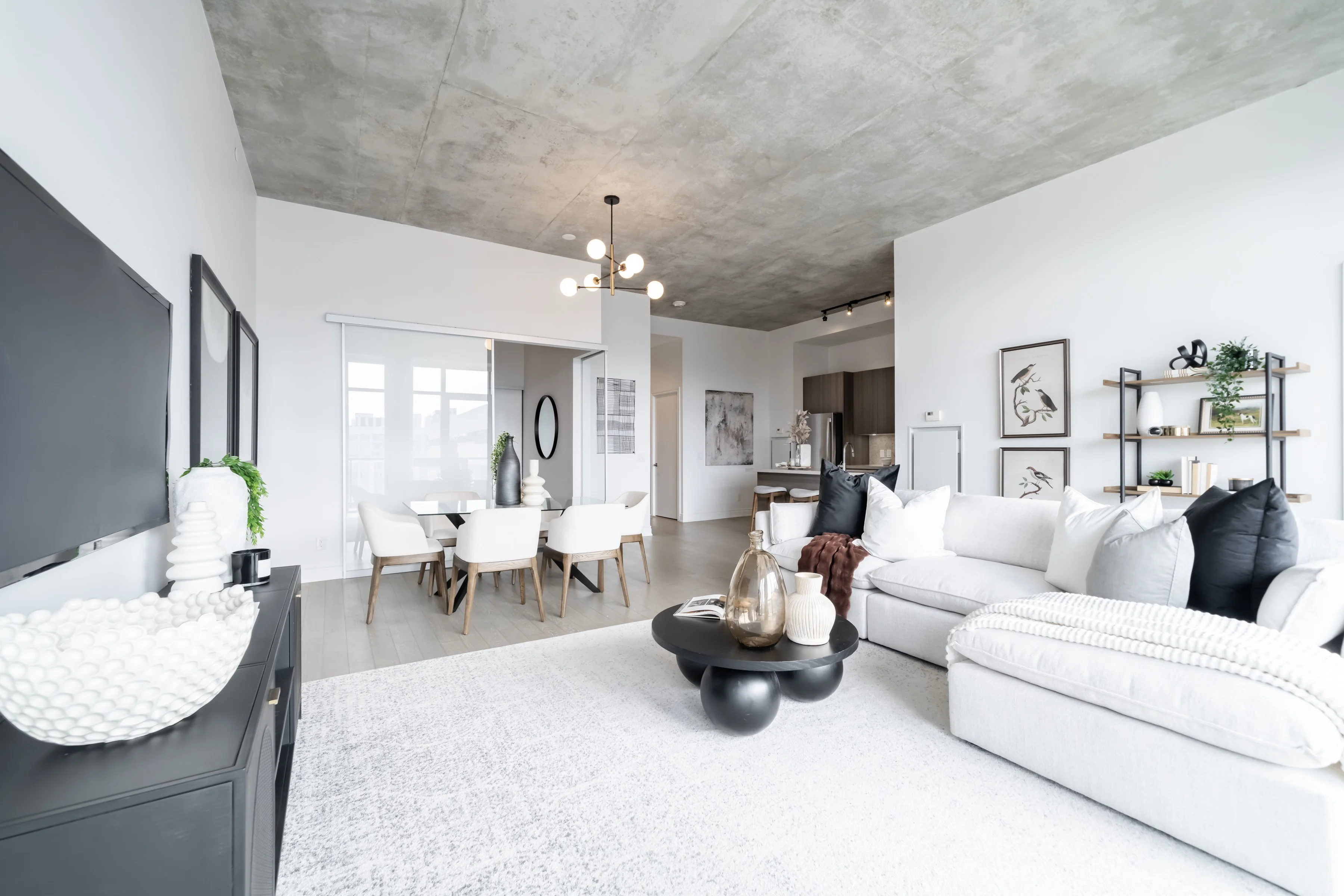
A home stager prepares a property for sale by making it appeal to the widest possible pool of buyers. They assess the property, recommend repairs and decluttering, arrange furniture to maximize space and flow, and style each room with professional art, accessories, and textiles. For vacant homes, they bring in a full furniture package from their inventory. For occupied homes, they work with what is already there while adding and removing pieces as needed. The goal is always the same: make buyers feel, on first viewing, that this is the right home.
The simplest way to understand what a stager does is to understand what they are working against. When a buyer walks into a property, they form an impression within seconds. That impression is almost entirely emotional, not rational. They are not consciously evaluating square footage or crown moulding. They are reacting to how the space feels.
A stager's job is to engineer that feeling. Every furniture arrangement, every accessory placement, every colour choice is made with the buyer's emotional response in mind, not the current owner's personal taste. That distinction is the whole discipline in a sentence.
The staging process, step by step
Staging is not a single event. It is a sequence of decisions, each one building toward a presentation that is ready for listing photos and showings. Here is what that sequence looks like for a typical Toronto property.
-
Initial consultation
The stager walks through the property with the seller, sometimes accompanied by the listing agent. They assess every room: what is working, what needs to be removed, what repairs should be addressed before staging day, and what the property needs to compete effectively in its price range and neighbourhood. The consultation typically takes one to two hours and results in a written action list for the seller.
-
Pre-staging preparation
Before the stager returns, the seller completes the items from the action list. This usually means decluttering, removing personal photos and collections, touching up paint, deep cleaning, and addressing any deferred maintenance that will show up in photos or showings. Staging works best on a well-prepared canvas. A stager cannot compensate for a property that has not been properly prepared.
-
Furniture and inventory selection
The stager selects the furniture, art, textiles, and accessories that will be used for the staging. For a vacant property, this means assembling a complete package from inventory. For an occupied property, it means selecting supplementary pieces that will work alongside what is already in the home. The selection is tailored to the property's style, price point, and the likely buyer profile for that neighbourhood.
-
Staging day
The staging team arrives with everything needed. For a vacant property, this means a truck of furniture and accessories. For an occupied property, the team may also remove items from the home temporarily, store them off-site, and replace them with professional pieces. Most Toronto properties are staged in a single day. Larger homes may require two days. When the team leaves, the property is fully ready for photography.
-
Photography and listing
Listing photos are taken while the staging is in place. This is the most important step in the sequence: the staging exists primarily to make the photography exceptional. Buyers see listing photos before they ever visit a property. The photos determine whether a showing gets booked at all. A staged property photographs dramatically better than an unstaged one.
-
De-staging after sale
Once the property is sold and the closing date is confirmed, the stager's team returns to remove all staging inventory. For vacant properties, this means collecting all furniture, art, and accessories. The seller does not need to arrange anything. Everything that arrived on staging day leaves with the staging team.
For a full breakdown of the two main approaches, see our guides to vacant home staging and occupied home staging.
What is included in home staging (and what is not)
Direct Answer
Home staging includes furniture, art, accessories, plants, textiles, delivery, installation, and removal of all staging inventory. It does not include cleaning, painting, repairs, landscaping, or any permanent modifications to the property. Those items are the seller's responsibility before staging day.
Included in Staging
- Furniture selection and placement
- Art, mirrors, and wall decor
- Decorative accessories and objects
- Textiles: rugs, cushions, throws
- Lamps and lighting accessories
- Plants and greenery
- Delivery and professional installation
- Removal after the property sells
Not Included in Staging
- Deep cleaning (seller arranges)
- Painting and touch-ups (seller arranges)
- Repairs and maintenance (seller arranges)
- Landscaping and exterior work
- Listing photography (typically the agent arranges)
- Moving or storing the seller's belongings long-term
The division of responsibility is straightforward: the stager creates the presentation, and the seller prepares the canvas. A property that goes into staging day with visible repairs outstanding, dirty windows, or heavy clutter will not achieve the same result as one that arrives clean and prepared. The staging investment lands hardest when the preparation has been done properly.
For sellers unsure of what preparation is needed, the initial consultation is the right time to ask. A good stager will give you a specific, prioritized list rather than a vague suggestion to "freshen things up."
How home staging differs from interior design and decorating
The confusion between staging and interior design is common and understandable. Both involve furniture and aesthetics. The similarity ends there.
The purpose is different
Interior design is done for the person who lives in the space. The goal is to reflect their personality, meet their functional needs, and create an environment they want to come home to every day. Home staging is done for the person who has not yet seen the space. The goal is to make the broadest possible audience feel that this could be their home.
An interior designer might choose a bold wallpaper because the client loves it. A stager removes bold wallpaper because buyers who love it are outnumbered by buyers who do not. Staging is the discipline of removing personal preference from the equation.
The timeframe is different
Interior design produces permanent decisions the homeowner lives with for years. Home staging produces a presentation that lasts from listing day to closing day, typically four to eight weeks. All furniture brought in by a staging company is rented from their inventory for that period. Nothing is purchased. Nothing stays.
The buyer's eye, not the owner's eye
A decorator or interior designer asks: what does this person want? A stager asks: what will make a buyer in this price range, in this neighbourhood, feel at home? Those are meaningfully different questions. A stager trained in buyer psychology knows that a primary bedroom needs to read as a retreat, that a kitchen needs to feel clean and spacious rather than personalized, and that a living room needs to suggest a lifestyle the buyer aspires to, not the one the current owner lives.
The inventory question
Interior designers source furniture for clients to own. Stagers draw from their own inventory, which is curated for broad appeal, built for photography, and maintained in rotation across multiple properties. Kelly Allan Design operates from a 10,000 sq ft warehouse in Toronto, which means the available inventory covers every property type: condos, detached homes, larger family properties, and properties at various price points across the GTA.
The practical difference for the seller: you do not buy anything. Everything arrives, does its job, and leaves.
Why staging works: what the return on investment looks like
Sourced Data: As of Q1 2025
The Real Estate Staging Association's Q1 2025 report found that every $1 invested in staging returns $23.34. The NAR's 2025 Profile of Home Staging found that staged homes sell 73% faster than non-staged properties and that 82% of buyers' agents say staging helps buyers visualize a property as their future home. A staging investment of 1.3% of the listing price yields an average 7.1% over-list return, according to NAR 2025.
The mechanism behind these numbers is not complicated. Staged homes photograph better than unstaged ones, which means more buyers book showings. More showings means more offers. More offers means less negotiating leverage for the buyer, which protects the seller's price. The 63% statistic above is significant: sellers who skip staging are far more likely to face the uncomfortable moment of cutting the price to attract interest.
On a $1.2 million Toronto home, a 1.3% staging investment is $15,600. The NAR's 2025 data suggests an average return of 7.1% over list, which on the same property is $85,200. That is not a guaranteed outcome on any individual property. It is, however, a well-documented average across a large sample of staged transactions. The investment merits serious consideration rather than dismissal.
For a detailed look at what staging costs at different property sizes and types, see our home staging pricing page.
Who needs a home stager
The short answer is: most Toronto sellers benefit from professional staging. The longer answer depends on the property and the situation.
Sellers of vacant properties
Vacant properties are the clearest case for staging. An empty room photographs poorly, feels smaller than it is, and gives buyers no visual information about how the space works. Buyers struggle to imagine furniture placement in an empty room, and that difficulty translates directly into hesitation and lower offers. Vacant home staging resolves all of these problems by filling the space with furniture that shows buyers exactly how a room can live.
Sellers who are still living in the property
Occupied home staging is for sellers who have not yet moved out. The stager works with the existing furniture as a base, removing and rearranging as needed, and adding professional pieces to elevate the overall presentation. This is often a cost-effective approach because the stager is supplementing rather than replacing everything. It requires some flexibility from the seller: certain personal items, family photos, and furniture pieces will need to be stored during the listing period.
Realtors preparing listings
Many of the staging projects Kelly Allan Design completes are initiated by listing agents, not sellers directly. A realtor who recommends professional staging to every seller is giving their listing the best possible chance of performing well on MLS. Staging directly affects listing photos, which directly affects showing volume, which directly affects the final result. Realtors who stage consistently also tend to see stronger client referrals, because clients remember the experience of a well-presented listing and a smooth, fast sale.
Estate sales and senior downsizing situations
Estates and downsizing situations often involve properties that have not been updated or prepared for the current market. The furniture and decor may reflect decades of personal accumulation rather than current buyer expectations. Staging for estate sales typically involves more significant decluttering and a larger staging scope, but the result is the same: a property that presents well and sells at the best available price. Kelly Allan Design has extensive experience in estate and downsizing staging across the GTA.
Sellers in competitive neighbourhoods
In Toronto neighbourhoods where multiple comparable properties are listed simultaneously, staged homes have a direct competitive advantage. Buyers viewing several properties in the same price range and area will remember the staged one. They will return to it. They will make an offer on it before an equally-priced unstaged option, because it feels more finished, more ready, and more like somewhere they can imagine living. In a competitive market, staging is not a preparation; it is a competitive strategy.
See the full range of Kelly Allan Design staging services to understand which approach fits your situation.
Frequently asked questions
Ready to see what staging can do for your property?
Fixed-price estimates within 1 business day. Same-week installation available across the GTA.
Get a Free Estimate